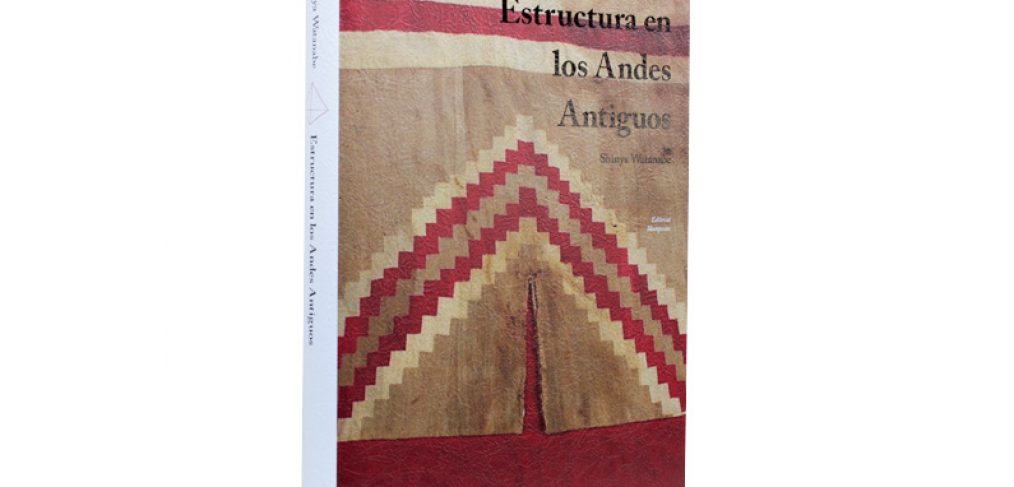
Estructura en los Andes Antiguos

Estructura en los Andes Antiguos

  • Shinya WATANABE / 2013.9
  • JPY 5,714 / A5 size, hardcover, 314 pages
  • bookdesign: Tamon YAHAGI

Why did the Inca Empire quickly dominate vast areas?
It dates back to BC and extracts the structure of the Inca royalty by decoding the Andean iconographic materials. We approach the background of the expansion of the empire. Spanish version of the second edition, “Formation of the Inca Empire” published previously.
(ISBN 9784861103711)

Table of contents

Introduccion
Capitulo 1: Kuntur Wasi? genesis de la estructura
Capitulo 2: Tiwanaku ? transformacion
Capitulo 3: Estructura ritual y politica en el Imperio inca
Capitulo 4: Estructura andina ? modelo tetraedrico

Author

Shinya WATANABE
Born in Aizu, Fukishima in March 1973. His major is archaeology of the Andes and cultural anthropology. He has been continuing the investigation about Peru from 1995. He graduated from the Faculty of literature at Tokyo University, received M.A. and completed the doctoral program at Tokyo University, Japan. Ph.D.. After holding full-time lecturer, currently the Associate Professor of the Faculty of literature at Nanzan University. In his book “Establishment of the Inca Empire: Social Dynamics and Structure of the Spanish Andean Society” and “Estructura en los Andes Antiguos” (Shumpusha Publishing).

Order this book


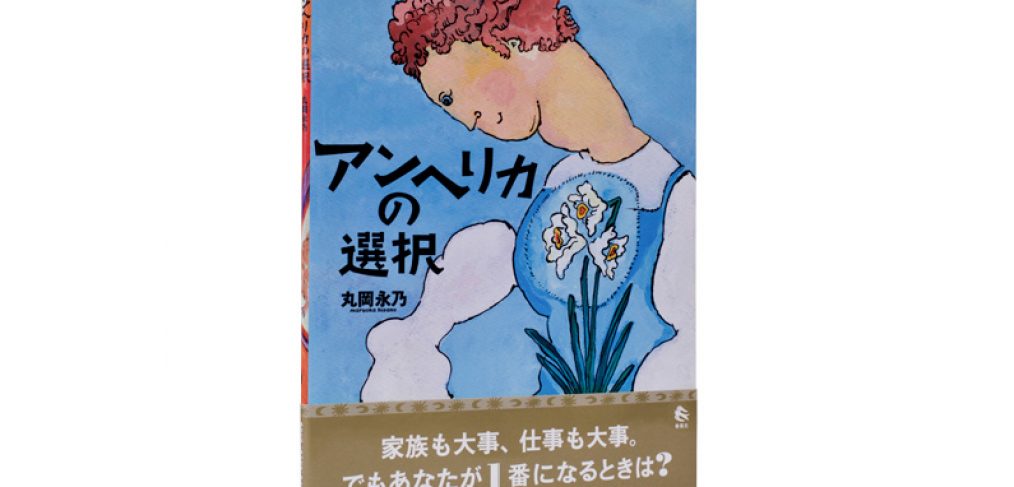
Anherika no Sentaku

Anherika no Sentaku

  • Hisano MARUOKA / 2012.12
  • JPY 1,800 / B4 size, hardcover, 32 pages
  • bookdesign: Yoko GOTOH

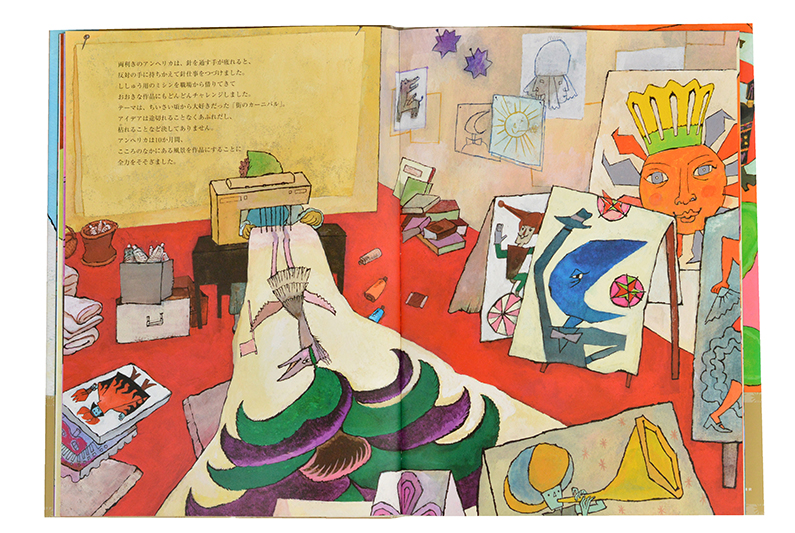
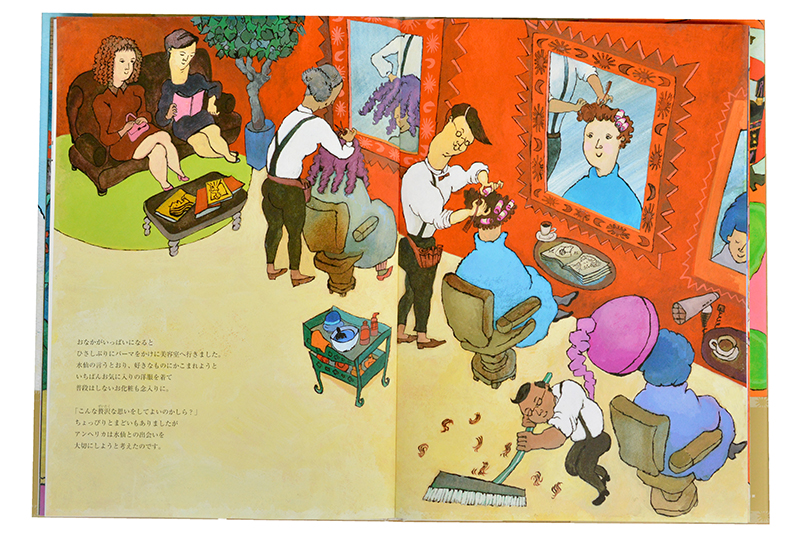
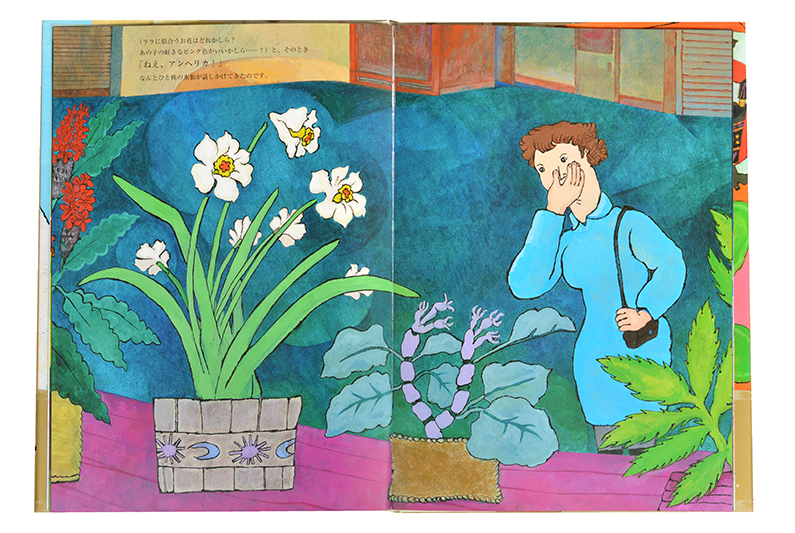
Family matters, also work does. But when are you the No.1 to yourself?

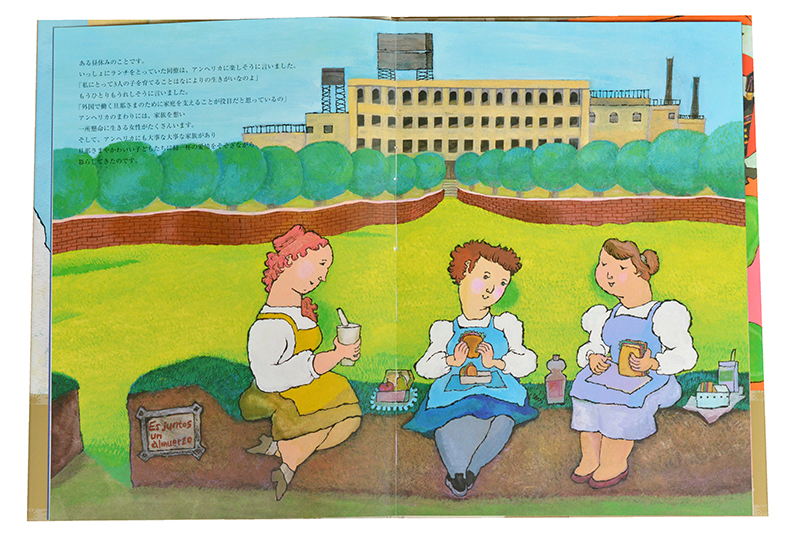
A large-size picture book with rich colors that tells the story of Anjelica’s dream coming true.
(ISBN 9784861103377)

Author

Hisano MARUOKA
Born in Ooita and grew up in Kanagawa. Graduated from the Major of printmaking in the Department of Painting at Tama Art University. She is working extensively mainly on writing and painting. Poems and pictures are series on literary magazine “Wasted Land” (Kouchi Publishing), “12 water stories magazine” (Sunlight Lab). Interviewed in ‘Bungei’ winter 2001 issue (Kawade Shobo Shinsha). In her book Poems “Kojika no Kyusoku(Window of the Fawn)” (WindchimeBooks) and Poetry collection “Kimi ni Shirotumekusa no Kanmuri wo(The crown of white clover to you)”(Shumpu Publishing). Author website is “Write & Draw”.

Order this book


La Transmission des Savoirs: Une Analyse Dynamique du Discours

La Transmission des Savoirs

Une Analyse Dynamique du Discours

  • Fumiya ISHIKAWA / 2012.2
  • JPY 5,524 / A5 size, paperback, 334 pages
  • bookdesign: Toshinobu NAGATA

Elucidation and discussion on the process of “information” and information transmission by words.
We analyze the daily conversation between French and Japanese with French, the words used by the administration for information transmission, the words and images composing the TV commercial from a dynamic point of view.
(ISBN 9784861103025)

Table of contents

PREMIERE PARTIE
Interaction en classe de FLE:categorisation, contexte et affection
1. L’analyse des activites metalinguistiques en classe de langues et/ou dans la communication exolingue:transmission de savoirs et/ou organisation de discours
2. Le savoir socioculturel en classe de FLE de niveaux debutant et intermediaire : une approche dynamique des dimensions socioculturelles de la langue
3. La (re)construction des representations de la langue dans et par le discours professoral : une analyse linguistique et ethnomethodologique du processus discursif de description/categorisation de la langue
4. La description des apprenants dans et par les activites de reformulation de l’enseignant en classe de langue
5. L’articulation de la transmission de savoirs et de l’introduction de stereotypes (ou du stereotypage) dans la classe de langue : une analyse interactionnelle de stereotypes en discours didactique
6. La negociation des images de soi dans et par le discours didactique : une analyse dynamique de l’articulation entre transmission de savoirs et (re)con-struction de l’identite en classe de FLE
7. L’aspect affectif du discours en classe de langue : analyse linguistique et enonciative du rire
DEUXIEME PARTIE
Didactique du FLE pour les Japonais
8. L’enseignement du francais au Japon : une didactique du FLE mise en jeu par la realite exterieure de la classe
9. L’≪heteroglottete≫ de la classe de langue en milieu institutionnellement ≪homoglotte≫ : l’articulation entre le discours didactique et le quotidien des apprenants
TROISIEME PARTIE
Formation des formateurs : discours doublement ≪meta≫
10. Analyse des commentaires du conseiller pedagogique : la didacticite du discours du formateur de formateurs …
QUATRIEME PARTIE
Discours en contexte social : administration publique et medias
11. Analyse linguistique des processus de (re)construction des notions de ≪citoyen≫ et d’≪etranger≫ dans et par un discours administratif : reflexion linguistique sur des questions sociales
12. Discours producteur/multiplicateur de sens : une analyse de la publicite commerciale a la television japonaise

Author

Fumiya ISHIKAWA
Professor of the Faculty of intercultural communication at Rikkyo University, Japan. He obtained Ph.D. at the Paris Third University=New Sorbonne University. He is the author of “L’Interaction Exolingue: Analyse de Phenomenes Metalinguistiques. Continuite et Discontinuite Entre Situation d’Enseignement/Apprentissage et Situation ≪naturelle≫” (Shumpsha Publishing).

Order this book


Reflections on Chomsky’s Strong Minimalist Thesis II: What UG Should be Like in the Context of Plato’s and Darwin’s Problems

Reflections on Chomsky’s Strong Minimalist Thesis II

What UG Should be Like in the Context of Plato’s and Darwin’s Problems

  • Norio SUZUKI / 2012.2
  • JPY 6,667 / A5 size, paperback, 300 pages
  • bookdesign: Toshinobu NAGATA

With the rapid development of the minimalist program, generative grammar today (the biolinguistic enterprise) now faces up to a new, more than ever challenging problem  Darwin’s problem (also known as the logical problem of language evolution). With the ultimate goal of elucidating the human nature and the human capacity in sight, researchers in this promising field continue their dedicated effort to understand not only the design and development of the human language faculty but its origins and evolution in the hominin history. In Reflections on Chomsky’s Strong Minimalist Thesis II: What UG Should be Like in the Context of Plato’s and Darwin’s Problems, Norio Suzuki brings his recent works together to discuss this new problem anew. By drawing on such crucial notions as UG-residues, the SMT, epigenetics and biological bootstrapping, Suzuki offers an in-depth reexamination and reevaluation of some of the most important proposals made in current minimalist theorizing. Because of the highly technical nature of the discussion made throughout, the book is certainly not for everyone out there, and there is no denying that other researchers will find some of the author’s arguments, suggestions and conclusions hard to accept for the moment. But that is where the very true value of this book lies, as a rich food for further thought. Together with Reflections on Chomsky’s Strong Minimalist Thesis: Evolution, UG Residues and Helen Keller previously written by the same author, this collection of papers should serve as a good steppingstone for the future progress of generative grammar.
― Koji Fujita, Kyoto University
(ISBN 9784861103001)

Table of contents

CONTENTS
PREFACE and BEYOND
ACKNOWLEDGMENTS
Chapter1: True Optionality as Evidence for UG-Residues
Chapter2: What Parametric Variation Should be Like, Given Plato’s and Darwin’s Problems
Chapter3: The SMT, the CLT, and the Crash-proof System: How to Obtain a Minimal UG
Chapter4: What Happens in Acquisition: Principle B of the Binding Theory and Scalar Implicature Computation in Child Language
REFERENCES
AUTHOR INDEX
SUBJECT INDEX

Author

Norio SUZUKI
1947: Born in Gifu Prefecture, Japan.
1980: Finished the Doctoral Course (first half) for English Literature of the Department of Literary Studies, Graduate School of Nagoya University, Nagoya, Japan.
1982: Left School (halfway before finishing the latter half of the above course).
1982-1985: Full-Time Lecturer, Department of English Literature, Shinwa Women’s College, Kobe, Japan.
1985-1994: Associate Professor, Department of English Literature, Shinwa Women’s College.
1994-2002: Professor, Department of British and American Studies, Kobe Shinwa Women’s University.
1988-1989: Visiting Scholar, Department of Linguistics, University of Connecticut, Storrs, Connecticut.
2002-2011: Professor, Department of (Clinical) Psychology, Faculty of Human Development and Education, Kobe Shinwa Women’s University.
2011-Present: Professor, Department of Cross-Cultural Studies, Faculty of Literature, Kobe Shinwa Women’s University.
Publications
Gendai Eibunpo Jiten (Sanseido’s New Dictionay of English Grammar). 1992. Tokyo: Sanseido. [Participated as author of specific entries].
Studies in Generative Syntax (Seisei-togo-ron Kenkyu). 1997. Tokyo: Eichosha.
Eigo-gaku Yogo Jiten (A Dictionary of Technical Terms of English Linguistics). 1999. Tokyo: Sanseido. [Participated as author of specific entries].
Reflections on Chomsky’s Strong Minimalist Thesis: Evolution, UG Residues, and Helen Keller. 2007. Yokohama: Shumpusha Publishing.

Order this book

 

Kabocha no Shita de: Uganda Sensou wo Ikiru Kodomotachi

Kabocha no Shita de

Uganda Sensou wo Ikiru Kodomotachi

  • Naoko SAKURAGI (Photography, Text), Ujitaka ITOH (explanation) / 2011.9
  • JPY 1,800 / duodecimo landscape, softcover, 120 pages
  • bookdesign: Tamon YAHAGI


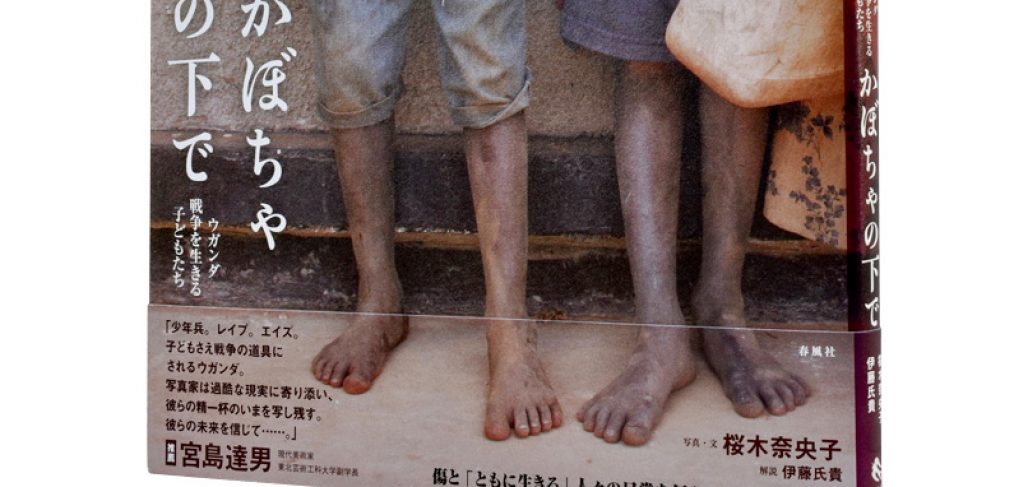
In Uganda, hundreds of thousands of people have died  as a result of internecine strifes between peoples and between ethnic groups. This collection of photographs shows children living strongly and energetically in their daily lives, with warfares and a tragic past. There are many color photographs in this book.

[Recommendation] Miyajima Tatsuo (contemporary artist)
Boy soldiers, rape, AIDS. In Uganda, even children are used as tool of war. The photographer stays close to their harsh reality and captures their fullest present, believing in their future…
(ISBN9784861102592)

Author

Naoko SAKURAGI
Photographer. Born in Kochi, Japan in 1977. Graduated from the Faculty of literature at Ritsumeikan University. She visits northern Uganda during the civil war while studying at university and starts taking pictures with the theme of “the possibility of another way of life.” In April 2007, Achiori (northern Uganda) is appointed ambassador for goodwill. NPO corporation (pending) African representative of water. Her website is “Water of Africa”.

Ujitaka ITOH
Born in 1968. literary critic, full-time lecturer in Faculty of literature at Meiji University. His main books are “Kokuhaku no Bungaku(Literature of Confession)”,”Meisaku ha Kakureteiru(Classics are hiding)”(Co-author).

Order this book


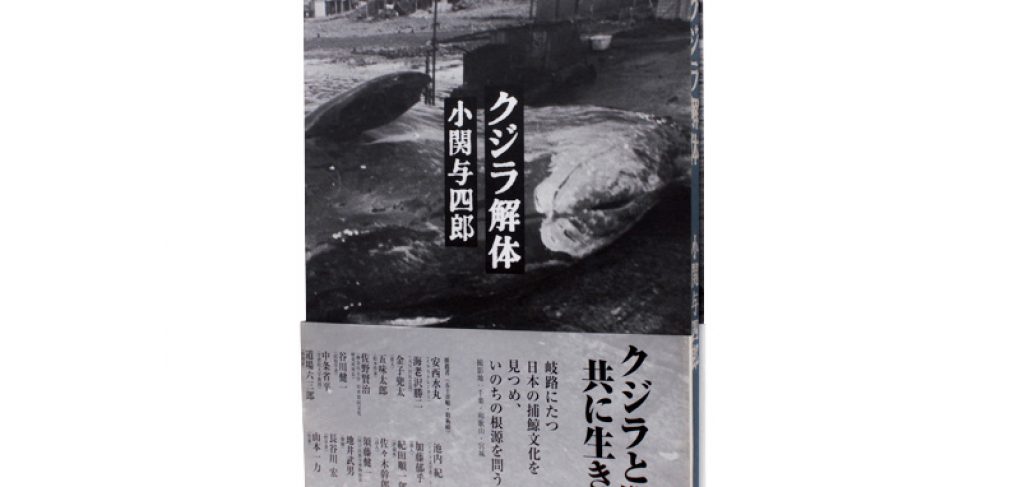
Kujira Kaitai

Kujira Kaitai

  • Yoshiro KOSEKI / 2011.6
  • JPY 15,000 / A4 size, hardcover with box, 208 pages
  • bookdesign: Makoto WADA

A fisherman waiting for the departure, men cutting down a huge body, historical sites of ancient-style whaling, whale cuisine, a whale exhaling on the beach… Japanese people who eat whales and live with whales. A true documentary by the photographer of “Kujukurihama” by which he got a huge popularity! he have been shooting over 24 years at Wada-ura at Kujukurihamahama (Chiba), Taiji (Wakayama), Ayukawa (Miyagi). 121 monochrome picture.
Japanese library association selection book.
(ISBN 9784861102615)

Author

Yoshiro KOSEKI
Born in 1935, a farmer in Kawabe, Chiba. He received the new face award of The Photographic Society of Japan for the photo collection “Kujukurihama”(mokujisha Publishing). He is the author of “Kujukurihama”(shumpusha publishing) and “Kujukuri ujo” (Tokyo Newspaper Publishing Bureau, 1993).

Order this book


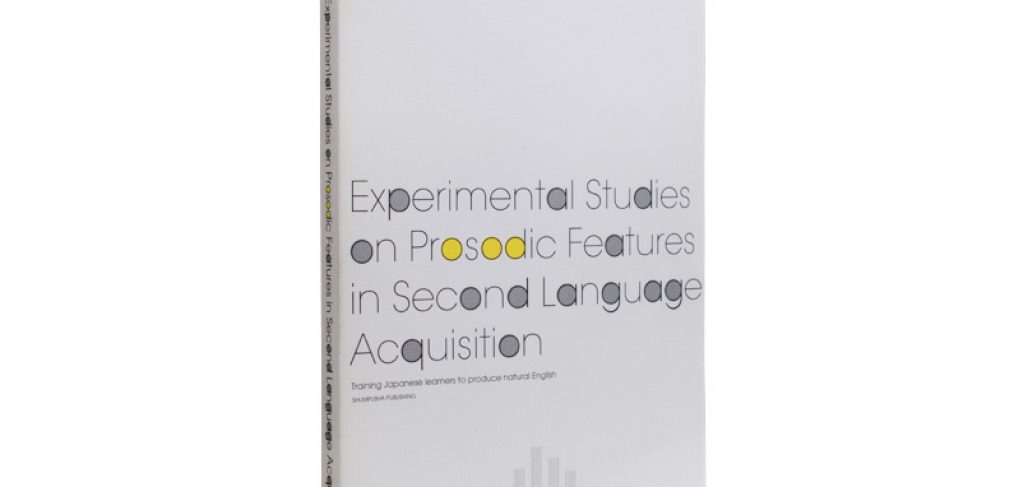
Experimental Studies on Prosodic Features in Second Language Acquisition

Experimental Studies on Prosodic Features in Second Language Acquisition

  • Midori IBA / 2010.8
  • JPY 4,600 / A5 size, paperback, 186 pages
  • bookdesign: Yoko GOTOH

How do Japanese people speak natural English?
Experimental investigation of training method clarifies that training of prosody prior to word pronunciation practice is effective.
It connects speech science and English education and opens the path of rational English learning.
(ISBN 9784861102356)

Table of contents

Chapter 1 (study 1)
The Influence of Model Sounds on the Speech Production of Japanese Learners of English
Chapter 2 (study 2)
The Effectiveness of Low-Pass Filters in English Pronunciation Training
Chapter 3 (study 3)
The Apparent Priority of Prosodic Features over Individual Sounds in Second Language Speech Learning
Chapter 4
General Discussion and Implications for Second Language Pronunciation Teaching
Chapter 5
Teaching English Pronunciation for Global Communication

Author

Midori IBA
Graduated from the Department of English in Faculty of arts and sciences at Tsuda College, Japan. She received her M.A. degree from Kobe University. Ph.D.(Kobe University). Visiting researcher of University of London in 2002. Associate professor of The Institute for Language and Culture at Konan University.

Order this book


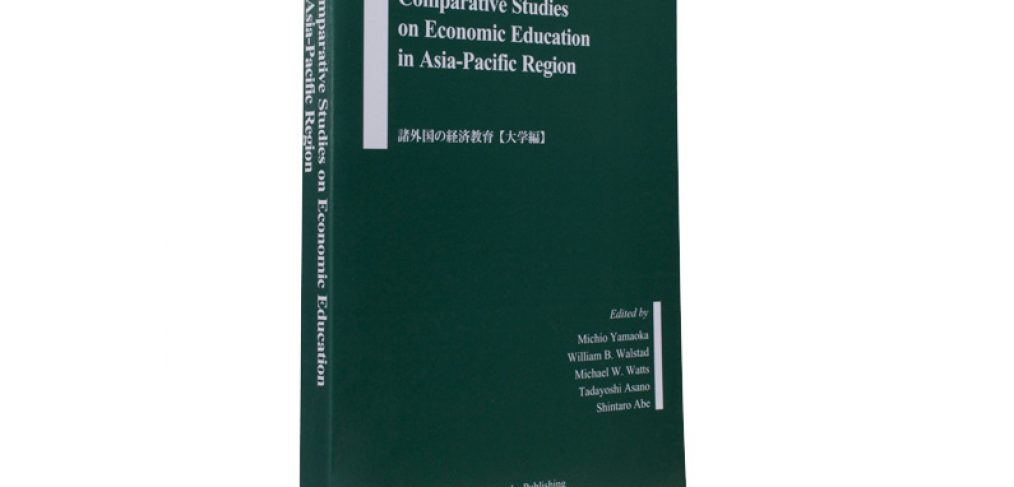
Comparative Studies on Economic Education in Asia-Pacific Region

Comparative Studies on Economic Education in Asia-Pacific Region

  • Michio Yamaoka, William B. Walstad, Michael W. Watts, Tadayoshi Asano and Shintaro Abe (eds.) / 2010.3
  • JPY 2,000 / duodecimo, paperback, 242 pages

(ISBN 9784861102073)

Table of contents

Part 1  Economic Literacy of Undergraduate Students in Asia-Pacific Region: Results of the Test of Understanding in College Economics (TUCE)
I. The U.S. Test of Understanding in College Economics: Revision and Results
II. Recent Results from TEL3 & TUCE: Building on Students’ Prior Knowledge of Economics
III. Comparative Korean Results of TUCE with U.S. and Japan
IV. The Philippine Test of Understanding in College Economics: The UPLB Case

Part 2  Undergraduate Economics Coursework across the World
I. Economics Education within the Education System in Scotland
II. Economics Education in Taiwan
III. Undergraduate Economics in the United States
IV. Teaching Economics in New Zealand: Recent Trends and Issues
V. How Students Acquire Economic Education in the Philippines?  Features, Assessment and Teaching Methods of the UPLB Economics Major Program

Editors

Michio Yamaoka, William B. Walstad, Michael W. Watts, Tadayoshi Asano and Shintaro Abe


Order this book

Decoding Paul Muldoon: Poetics and Politics

Decoding Paul Muldoon

Poetics and Politics

  • Ryoji OKUDA / 2009.3
  • JPY 2,500 / duodecimo, paperback, 168 pages
  • bookdesign: Tamon YAHAGI

Paul Muldoon, contemporary poet of Northern Ireland, following Seamus Heaney. Using the concept of “hybridity” as a key, it understands the political hidden in the deep layer of the sideways speech.
(ISBN 9784861101762)

Table of contents

Preface
Introduction
CHAPTER 1 Mixed Marriage: the Poetics of Hybridity
CHAPTER 2 Translating Poetry and Politics in Monologues
CHAPTER 3 Transcending the Limits of Language: Imagination and Politics
CHAPTER 4 Artistic Subtlety of Politics: Decoding the Messages in “Madoc-A Mystery”
CHAPTER 5 Emigration and Homesickness
Conclusion
Appendix: Poetry and Politics in Ireland
Selected Bibliography
Index

Author

Ryoji OKUDA
Born in Hiroshima, Japan in 1958. Professor in English at Tokai University, Hiratsuka, Japan.  He is coeditor/author of “Meeting Paul Muldoon” (1994) and cotranslator of “Paul Muldoon: Selected Poems 1968-1983” (Japanese translation, 1996).  Essays include “In Search of Momentary Life: Yeats’s ‘Among School Children’”(Humanity Viewed from Language, 2000), “The dream of Irish Restoration in Dubliners: Joyce’s Messages” (Linguistic Expression and Creativity, 2005). He is currently secretary of the Yeats Society of Japan.

Order this book


Social Development, Culture, and Participation: Toward Theorizing Endogenous Development in Tanzania

Social Development, Culture, and Participation

Toward Theorizing Endogenous Development in Tanzania

  • Kumiko SAKAMOTO / 2009.2
  • JPY 6,476 / A5 size, paperback, 550 pages
  • bookdesign: Tamon YAHAGI

Since independence in 1961, Tanzania has tried and tried to develop its own country. We will revise the view of development focusing only on economic indicators and explore the way of endogenous development based on multilateral analyzes of citizens’voices and nature and culture obtained by fieldwork. Mr. Jun Nishikawa praised!

In many societies in Africa and Asia, people are facing the rapid change brought about by modern society while protecting traditional culture and living. As the author worked on the site of Tanzania as a UN official, he made me think deeply about what social development harmonized with local culture is. As a result of this question, this book analyzes how people can participate actively on external development. It is an epoch-making masterpiece that reconstructed the theory of conventional social development from the standpoint of endogenous development focusing on culture based on abundant data. I would like to broadly recommend to people in the South who would like to review development issues with their own eyes.
― Jun, Nishikawa
(ISBN 9784861101748)

Table of contents

Introduction: Social development, culture, and participation
Part I Development and Culture Reconsidered in Tanzania
Chapter 1 Re-conceptualizing ‘Development’ and the Role of ‘Culture’
Chapter 2 Creation and Diversities of ‘Culture’ in Tanzania
Part II Social Development with Endogenous Perspective in Tanzania
Chapter 3 Tanzania’s Policies Re-examined: Endogenous perspectives and impacts on social development
Chapter 4 Participation in Development and Culture: From the diverse agencies in Lindi Region
Summary and Conclusions: Toward theorizing endogenous development

Author

Kumiko SAKAMOTO
Associate Professor of the Faculty of international studies at Utsunomiya University. Born in Kyoto, Japan. Graduated from Tokyo University of Foreign Studies. She completed the master degree program in the Graduate School of Economics and doctral program in the Graduate School of Asia-Pacific studies at Waseda University. Worked for UNICEF and UNDP Tanzania office, assistant at Waseda University and current position is lecturer at Utsunomiya University.

Order this book